2026, Facing Meta's "All-Seeing Eyes," How to Safely Take Your Matrix Accounts Global?
Social media operations, especially for matrix accounts on Meta platforms like Facebook and Instagram, are becoming more complex than ever. If you're still managing your account matrix with traditional datacenter proxies, 2026 might be the year you need to completely change your strategy. The industry consensus is that Meta's algorithms for identifying and blocking datacenter IPs have evolved to a new level. In this environment, finding a solution that can simulate real user network behavior is no longer a "nice-to-have," it's a "must-have" for account survival. Today, we'll dive deep into why static residential ISP proxies are becoming the most important trump card in the hands of matrix account operators.
The Reality Dilemma for Matrix Account Operators: A Tug-of-War Between Growth and Risk
For businesses targeting the global market, cross-border e-commerce sellers, or content creators, operating multiple social media accounts (i.e., matrix accounts) is a common strategy to expand influence, conduct A/B testing, diversify risks, and refine audience engagement. Whether it's managing localized pages in different regions or running multiple niche content accounts, the matrix model offers significant efficiency gains.
However, behind this model lies a huge risk point: account association and abnormal login detection. Meta's platform security systems are designed to combat spam accounts, fake interactions, and fraudulent marketing. When the system detects multiple accounts logging in, posting content, or interacting frequently from the same datacenter IP address (i.e., datacenter IP), it highly suspects that these accounts belong to the same entity performing automated or bulk operations, triggering security alerts. At best, functionality is restricted; at worst, the entire account matrix is banned directly, leading to the instantaneous loss of months or years of accumulated followers, content, and commercial value.
The "Achilles' Heel" of Traditional Proxy Solutions
To counter IP restrictions, operators initially consider using proxies. But not all proxies solve the problem, and some can even exacerbate it.
- Datacenter Proxies: This is the most traditional and cheapest solution. They originate from large datacenters of cloud service providers, with concentrated and public IP address ranges. Platforms like Meta can easily identify these IP ranges and flag them as "commercial IPs" or "datacenter IPs." Using such proxies to manage matrix accounts is akin to highlighting yourself on the platform's regulatory "radar," making it the riskiest choice.
- Dynamic Residential Proxies: These proxies use IPs from real home broadband (ISP) connections, but the IP addresses change frequently. While more discreet than datacenter proxies, for scenarios requiring long-term stable logins and account authority building, the frequent IP changes themselves are considered "abnormal behavior." Imagine a real user's home network IP is usually relatively stable and doesn't change every hour or even every minute. The frequent changes of dynamic IPs may trigger secondary verification for "account hijacking" or "abnormal login," which is not conducive to the long-term health of the account.
- Shared Proxy Pools: Many proxy service providers offer vast shared IP pools, where users obtain IPs randomly. The problem is, you have no way of knowing who used the same IP before and for what purpose. If the previous user engaged in illicit activities with that IP, it might already be on the platform's blacklist, and you would inherit these risks when you start using it.
| Proxy Type | Source | Stability | Disguise to Meta | Suitable Scenarios |
|---|---|---|---|---|
| Datacenter Proxy | Cloud Server Datacenter | Very High | Very Low, Easily Detected | Data Collection, Short-term Testing |
| Dynamic Residential Proxy | Real Home ISP | Low (IP changes frequently) | Medium | Short-term, High-anonymity browsing |
| Static Residential Proxy | Real Home ISP | High (IP remains fixed) | Very High | Long-term account operations, Matrix management |
As the table above shows, for scenarios requiring long-term, stable, and secure ownership of social media authority accounts, static residential ISP proxies theoretically possess the most fitting characteristics.
Why Static Residential Proxies are the "Only" Long-Term Choice?
This judgment stems from a simple logic: the platform's goal is to serve and protect real users. Therefore, the safest strategy is to make your account behavior as close as possible to that of a "real user."
A real individual or household user's network environment has several core characteristics:
- Stable IP Address: Home broadband IPs are typically assigned by ISPs and may remain unchanged for weeks, months, or even years.
- Real Physical Location: The IP address is bound to a specific city, region, or even ISP operator, with consistent geographical information.
- "Clean" Network History: This IP address is usually used by only one household or a few individuals, with no history of large-scale, automated network activity.
Static residential ISP proxies precisely simulate this environment. They provide you with a long-term fixed IP address from a real home network. When you use this IP to log in and manage your Facebook matrix accounts, Meta's system sees your accounts as if they are being operated by real users in a fixed location. This greatly reduces the probability of triggering risk controls due to IP issues.
Especially considering industry predictions of Meta algorithm upgrades in 2026, the ability to identify non-residential IPs will reach new heights. At that point, matrix accounts relying on datacenter IPs will face systemic risks. Migrating your accounts to a static residential proxy network in advance is akin to building a survival environment for your digital assets that complies with the platform's "rules," truly looking ahead.
In Practice, How to Implement This Strategy with Professional Tools?
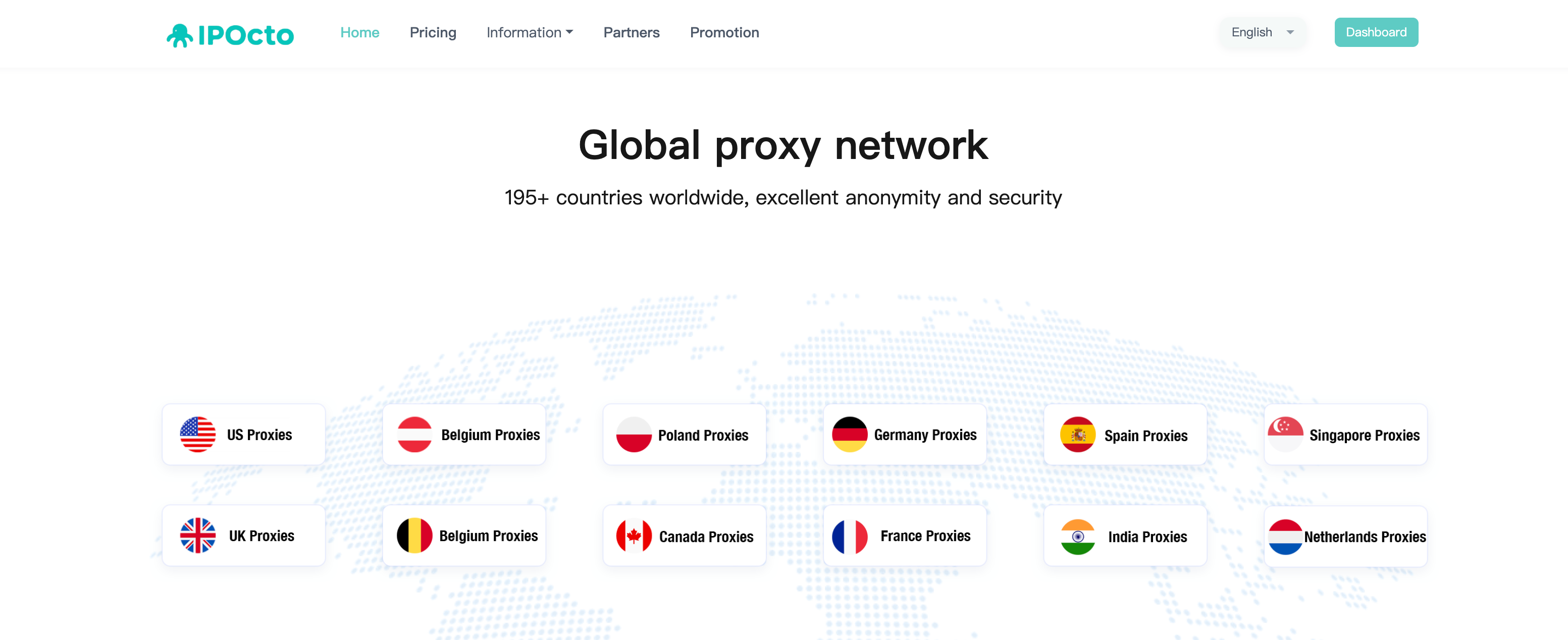
Understanding "why it's needed" leads to the next question: "how to achieve it." Manually finding and managing a large number of reliable static residential IPs is unrealistic. This is precisely where professional proxy service providers come in. Taking IPOcto, a familiar name, as an example, its high-quality static residential proxy service perfectly fits into this solution.
IPOcto's static residential proxy resource pool directly connects to real home ISP networks worldwide. When you obtain a static IP through its service, it's as stable and reliable as your local home network. It's not for you to "hide," but to "integrate" into the ecosystem of real user networks.
An Example Workflow for Secure Matrix Account Management
Let's imagine a cross-border e-commerce team that needs to manage Facebook brand pages for 5 different country sites.
Old Process (Using Datacenter Proxies):
- Purchase 5 datacenter proxies for the 5 accounts.
- Each account is permanently bound to one proxy IP.
- The operations team logs into accounts via tools to post content and reply to comments.
- Risk: Meta's system identifies that all 5 accounts originate from known datacenter IP ranges, flagging them as suspicious commercial activity. One day, due to an ad creative on one account triggering an audit, all other 4 associated accounts are restricted.
New Process (Using IPOcto Static Residential Proxies):
- Through the IPOcto platform, obtain a static residential proxy for each of the 5 target countries/regions.
- Bind the US account to the US static residential IP, the German account to the German static residential IP, and so on.
- The operations team logs into the corresponding accounts via their respective proxy IPs. The login environment for each account is completely consistent with its declared geographical location.
- Effect: In Meta's system, these 5 accounts are managed by 5 different real home users located in different countries. The association between accounts is greatly weakened, and each account can independently and stably build its authority and historical data, significantly enhancing its risk resistance.
Conclusion
In the world of digital marketing, rules are changing, and platforms are evolving. The anticipated Meta algorithm upgrade in 2026 is not a disaster, but a reshuffle that will distinguish compliant operators focused on long-term value from those pursuing short-term gains. For serious matrix account operators, investing in static residential ISP proxies is no longer a cost, but a necessary protection for core digital assets.
This is essentially a shift in mindset: from "how to bypass platform rules" to "how to better comply with and leverage platform rules." By making your account behavior as close as possible to that of a real user, you not only gain security but also a pass to long-term, healthy development within the platform's ecosystem. In an uncertain future, creating a certain, secure network environment for yourself is the cornerstone of stable progress for any global business.
Frequently Asked Questions FAQ
Q1: What is the actual difference between static residential proxies and dynamic residential proxies? Which is better? A1: The core difference lies in IP stability. Static residential proxy IPs are fixed long-term, simulating the stability of a real home network, making them ideal for accounts requiring long-term logins and authority building (e.g., main social media accounts, e-commerce backend). Dynamic residential proxy IPs change regularly, offering higher anonymity and are better suited for scenarios requiring frequent identity changes and large-scale public data collection. There's no absolute "better," only more suitable scenarios. For long-term holding of Facebook authority accounts, static proxies are the superior choice.
Q2: Does using static residential proxies guarantee 100% safety and prevent account bans? A2: No tool can guarantee 100% safety. Account security is a systematic endeavor, and the IP environment is just the most critical component. Using static residential proxies solves the problem of "environment authenticity," but you still need to adhere to platform community rules, perform normal human operations (reasonable posting, interaction), and avoid spam marketing activities. It provides a safe foundation, but ultimate account health depends on your operational behavior.
Q3: Do I need to get an independent static residential IP for every account in my matrix? A3: Ideally, yes. This is the best practice for maximizing the reduction of account association risks. Each account having an independent and geographically matched static residential IP can maximally create the illusion of "multiple independent real users" in front of the platform. If resources are limited, ensure that core high-value accounts have independent IP environments.
Q4: How can I determine if a proxy service provider truly offers high-quality static residential proxies? A4: You can pay attention to a few points: 1. IP Purity: Inquire about the IP source, whether it comes from real ISP home users, and if the IP pool is frequently misused. 2. Success Rate and Stability: Test the success rate and speed of the IP connecting to target websites (e.g., Facebook) for continuous stability. 3. User Reviews and Cases: Check if the service provider has successful cases in similar social media management scenarios. Providers like IPOcto clearly label proxy types and applicable scenarios and provide test resources, which are references for judging their professionalism.
Q5: Will my operating speed decrease when switching to static residential proxies? A5: Compared to datacenter proxies, residential proxies may have slightly lower bandwidth as they are real home networks. However, for normal social media management (browsing, posting, replying to messages), the speed is completely sufficient and won't feel noticeably delayed. Its advantage lies not in extreme speed but in stability and discretion. High-quality static residential proxy services optimize network routing to ensure availability and response speed meet business operation needs.
📤 Share This Article
🎯 Ready to Get Started?
Join thousands of marketers - start boosting your Facebook marketing today
🚀 Get Started Now - Free Tips Available